
While sophisticated scams affect people of all ages, criminals often target older adults, especially those who have accumulated more savings and investments than younger people. Reduced social support, such as for older adults who live alone or have lost a spouse, can limit opportunities to discuss suspicious requests with others. Many older adults also hesitate to seek help to verify payment requests because they want to maintain their independence. However, financial institutions are uniquely positioned to help protect these customers. They track industry scam trends and can help educate customers on how to protect themselves. They also can deliver timely, relevant guidance when account activity or events signal elevated risk.
Scams Are Designed to Manipulate Trust
Scams often exploit victims’ trust in familiar organizations and authority figures. Criminals may impersonate government agencies, financial institutions and well-known businesses to create a false sense of legitimacy. Appearing to be a trusted source, they can pressure victims to take immediate action before verifying the request.
For example, in a government impostor scam, a criminal posing as law enforcement or a court representative calls the victim and claims she missed jury duty and faces arrest unless an immediate payment is made for court fines. To increase credibility, caller ID spoofing can make the call appear to come from a legitimate government number, even though jury duty communications normally are sent by mail. Criminals also may demand payment by cash, gift cards or cryptocurrency, whereas legitimate organizations would not.
In another example, in a bank impostor scam, a criminal calls a victim and claims her account is compromised. The victim is instructed by the criminal posing as her bank to send money, withdraw cash or transfer funds to “protect” her accounts. In reality, the payment goes directly to the criminals. Fear, urgency and the appearance of authority can make these requests seem convincing, even to otherwise skeptical consumers.
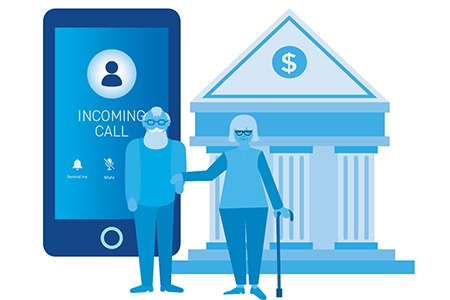
Financial institutions play an important role in disrupting payments related to scams. Unusual withdrawals, out-of-pattern transfers or payments to new recipients may signal that a customer is being manipulated. By identifying this unusual activity, asking thoughtful questions and educating customers about common scam tactics, financial institutions can help prevent losses before funds are lost to criminals.
Why Older Adults are Lucrative Targets for Criminals
Older adults often are targeted for their accumulated savings, retirement assets and other financial resources.
Online Activity Exposes Vulnerabilities
Criminals frequently tailor their scams using personal details from social media or online activity to increase credibility. For example, a retired military officer who regularly discussed stock purchases in online forums was targeted with a fake cryptocurrency investment. The offer was endorsed by “celebrities” and “guaranteed” to double his money if he sent a payment the same day. He followed the criminals’ instructions to send a wire to the cryptocurrency trading platform. His financial institution contacted him before completing the transaction to confirm that he had authorized the payment, since it was atypical compared to his normal activity — and asked if he had verified the legitimacy of the company. The customer complained to his accountant who also asked if he researched the cryptocurrency company, advised against making the “investment,” and explained that the financial institution was trying to protect him from a scam.

Social Isolation Contributes to Scams
Social isolation can increase scam vulnerability by reducing opportunities to discuss suspicious situations with trusted friends or family members. Older — perhaps widowed — adults who are managing finances alone for the first time may be especially susceptible. Criminals often attempt to create urgency and discourage victims from contacting others. In grandparent scams, for example, criminals may impersonate lawyers or law enforcement and claim a relative is in trouble, pressuring victims to act quickly without verification or discussing the request first with anyone else. Without anyone to consult, victims may comply under the assumption that they are helping family members.
To strengthen their protection, older adults can establish trusted contacts that financial institutions can notify when something seems suspicious — similar to an emergency contact — so support is available during specific types of high risk situations. These trusted contacts can provide potential scam victims with a reason to step back from the situation while the contact considers the payment and asks questions on the customer’s behalf that they may have otherwise ignored while in an emotional state.
Financial institutions play a critical role
Financial institutions have opportunities to help protect customers from scams through proactive intervention and education, tailored to older adults. Key actions can include:
Set clear expectations for safe banking practices
- Reinforce that the financial institution will never ask customers to withdraw or transfer funds to “protect” their account or verify activity
Encourage use of trusted contacts
- Recommend that older adults add a trusted contact who can be consulted or notified by the financial institution during high‑risk situations, including suspected scam attempts
- Educate trusted contacts about typical scam red flags to help them recognize criminal manipulation and fraud

Ask thoughtful questions to uncover potential scams
- Inquire about the purpose of the transaction to assess whether the customer may be responding to fraudulent pressure, such as a sense of urgency or fear
- Clarify whether someone encouraged them to quickly withdraw or move funds
Detect and escalate unusual activity
- Monitor for atypical withdrawals or payments, especially those involving new or suspicious recipients
- Observe behaviors that may indicate real time manipulation, such as a customer being on the phone with someone directing the transaction
- Educate customers about common scam tactics, including:
- Impersonation of government agencies, financial institutions or well-known companies
- Use of urgency and fear to pressure victims into quick decisions
- Requests for payment through cash, gift cards or cryptocurrency
Conclusion
Heightened trust, accumulated financial resources and reduced social support can increase scams vulnerability among older adults. Since these factors cannot be easily changed, awareness and proactive intervention is essential. Financial institutions often have the final opportunity to question an unusual payment or withdrawal before funds reach criminals. Recognizing when and how to intervene with empathy and clarity can help financial institutions prevent significant scam losses and protect their customers.